Content
Trying to manage all of the aspects that affect your profits can quickly become overwhelming if you don’t have a system to manage them. We created our software platform to help you simplify everything related to your assets, so you can put your attention on the more complicated aspects of your company. Having an overall picture of your asset situation will also help you identify which items need maintenance and which ones aren’t worth holding onto anymore. If you see that some assets have outlived their expected lifespan and are costing you thousands in upkeep, it’s time to trash it for something that will be worth the effort. Let’s say you have a car used in your business that has a value of $25,000.
Where is accumulated depreciation on balance sheet?
Accumulated depreciation is presented on the balance sheet just below the related capital asset line. Accumulated depreciation is recorded as a contra asset that has a natural credit balance (as oppose to asset accounts with natural debit balances).
We show the accumulated depreciation as a negative balance on the assets side of the balance sheet. You’re looking at your company’s income statement for July of the third year you’ve had this machine. For the month of July, this equipment’s depreciation expense is $2,000. However, your balance sheet will show an accumulated depreciation value of $60,000, since that is what has added up in the 30 months you’ve had this asset. Otherwise, only presenting a net book value figure might mislead readers into believing that a business has never invested substantial amounts in fixed assets. Depreciation is an expense, so it can be quite difficult to have an understanding of how it can affect the balance sheet.
Capitalization of Asset Improvements
Accumulated depreciation is a way for businesses to track the decrease in the value of their assets over time. The most common method is the straight-line method, which considers the asset’s initial cost, scrap value, is accumulated depreciation shown on the balance sheet and valuable life. This method assumes a steady decrease in value over the asset’s life. Businesses should regularly check and update their depreciation calculations to ensure their financial statements are correct.
Represents the net cost amount of the asset that is subject to depreciation. GAAP requires the computation of depreciation expense to be systematic and rational. Even though it is listed along with assets, depreciation does not provide any economic value. Depreciation is the systematic allocation of an asset’s cost to expense over the useful life of the asset.
Do you include accumulated depreciation on the balance sheet?
Many companies depend on capital assets such as land, equipment, furniture, property, buildings, vehicles, fixtures, and machinery as part of their operations. These assets tend to lose value over time due to factors such as wear and tear, technology updates, etc. As they depreciate, their value drops because the company cannot sell them at a price that is close to their original cost. Therefore, in accordance with accounting rules, companies must depreciate these assets over their useful lives. Due to this, companies recognize accumulated depreciation, as the sum of depreciation expenses recognized over the life of an asset. Balance sheets are important financial documents that include detailed information about a company’s assets and their original and present value.
In the example we have been using, the cost of the equipment is $60,000, its scrap value is $5,000, and its useful life is 5 years. The estimated units of production over the useful life of the asset is 5,000. Under the SYD method, the company looks towards recording more depreciation earlier in the life of the asset and less in later years. Here, the digits of the expected years of useful life are summed up then depreciation takes place on the basis of each number of years. For a better understanding, a table will be created to carry out this calculation.
Interest Costs on the Balance Sheet
Most capital assets have a residual value, sometimes called “scrap value” or salvage value. This value is what the asset is worth at the end of its useful life and what it could be sold for when the company has finished with it. Depreciation is an accounting method of allocating the cost of a tangible asset over its useful life to account for declines in value over time. The balance rolls year-over-year, while nominal accounts like depreciation expense are closed out at year end.
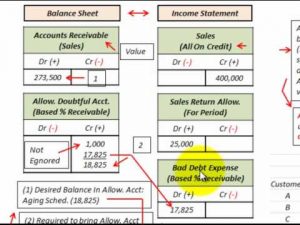
This rate is then kept the same across all years the asset is depreciated and this continues to accumulate until the salvage value is arrived at. Financial analysts use accumulated depreciation to calculate the net book value of an asset which is the value of an asset carried on the balance sheet. The net book value is calculated by subtracting the accumulated depreciation from the cost of an asset. Generally, accumulated depreciation is included under the long-term assets section of a balance sheet and reduces the net book value of the capital asset.
It will be represented as a current asset on the right side of the balance sheet. If the values of the adjusted purchases are provided, then the trial balance will show both the accounts for adjusted purchases and the closing stock. While reporting depreciation, a company debits depreciation accounts in the general ledger and credits the cumulative depreciation account. Depreciation expenses will pass through the income statement of a specific period when the above entry was passed. In the balance sheet, a debit balance in Unrealized Gain or Loss Equity is reported as a? Accumulated depreciation is calculated for long-term capital assets that can be sold for money.
Do you have to show accumulated depreciation on balance sheet?
Yes. Accumulated depreciation represents the total depreciation of a company's fixed assets at a specific point in time. Also, fixed assets are recorded on the balance sheet, and since accumulated depreciation affects a fixed asset's value, it, too, is recorded on the balance sheet.